
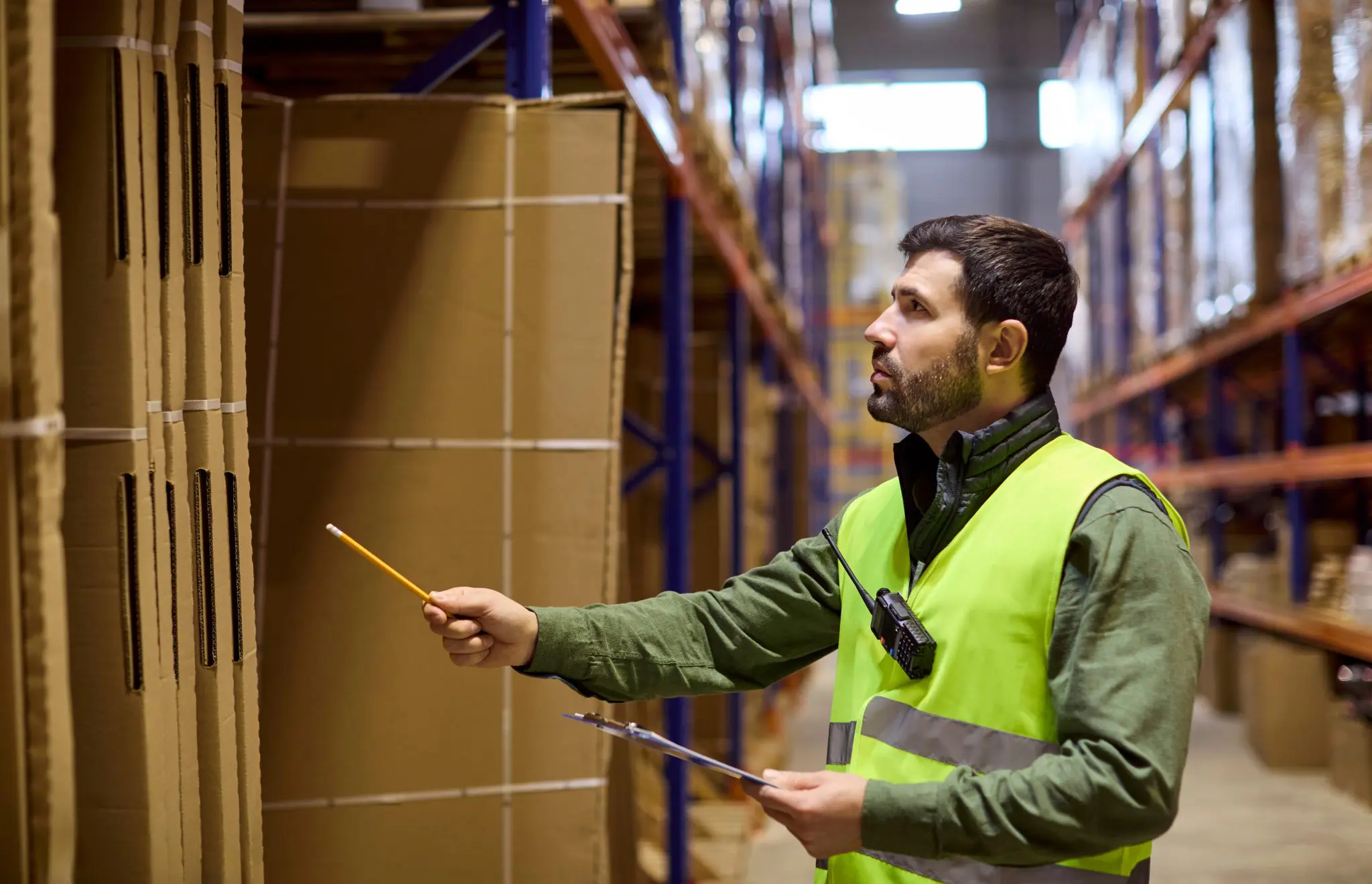
Barcode labels for inventory connect digital stock records with the cartons, pallets, assets and locations they are intended to identify.
Warehousing technology is becoming increasingly sophisticated. Digital twins, automated data capture and detailed WMS reporting can provide a clear view of inventory and movement. However, those systems still rely on identification that works in the physical warehouse.
A system might know that an item is stored at J-07-05-1. That information only helps if the operator can locate J-07-05-1 quickly and scan it reliably.
Physical warehouses change over time
New racking is installed. Pick faces move. Temporary staging areas become permanent. Individual labels are replaced as they wear or as the layout changes.
After several years, the physical identification can drift away from the original warehouse structure. Labels may follow different formats, use inconsistent print sizes or carry information that no longer matches the current system.
Good identification helps prevent that gap from developing.
Different inventory applications need different labels
Reliable warehouse identification does not mean making every label bigger. It means selecting a solution that suits each application.
- High-level rack positions may need larger or reflective barcodes.
- Floor staging areas need materials designed for traffic and abrasion.
- Cold or damp environments require suitable adhesives and face stocks.
- Human-readable information may need to be prominent even when a barcode is present.
- Frequently changing locations need labels that can be replaced cleanly.
These details affect whether a label continues to work once the warehouse is busy.
Managing variable inventory data
Saito can manage variable data for barcode labels, including unique item references, location codes, serial numbers, batch information and human-readable text. Data can be checked and organised before production so large label sets remain consistent.
The aim is straightforward: the right information, on the right identifier, visible from the right position and scannable when it is needed.
Digital systems will continue to improve. Their value still depends on the physical identification that connects the data to the real warehouse.